
Disclaimer: This content is for informational purposes only and should not replace professional medical advice.
1.0 Break the Ice and Emerge from Hibernation
When the temperature drops, the male instinct pushes you away from the incredible cold exposure benefits for men: hibernation. You seek the comfort of the couch, trading challenge for coziness. But this narrative is a choice, not a sentence. The cold isn’t the villain; it’s the tool you’ve been ignoring to forge steel. It’s time to challenge this mindset and understand that the cold is not an enemy to be avoided, but a powerful ally for self-improvement, offering proven cold exposure benefits for men to those who embrace the challenge.
Think of your body like the engine of a muscle car. In the summer heat, it spends extra energy just to keep from overheating. In the cold, all that power is directed toward performance on the road, not to the radiator. You operate with more efficiency and power. Instead of hiding from winter, you can use it to become more resilient, optimized, and focused.
This transformation, however, doesn’t start in the muscles or the metabolism. It starts in your mind. The first and most important benefits of embracing the cold are mental, preparing the ground for an inner fortress that is reflected physically.
2.0 The Mental Game: Forging Resilience Against the “Inner Winter”
Before optimizing the machine, you need to master the pilot. Winter can be brutal on your mental state. The reduction in sunlight directly affects brain chemistry, decreasing the production of serotonin—the well-being neurotransmitter. This can lead to what is known as the “winter blues” or, in more serious cases, Seasonal Affective Disorder (SAD), leaving you unmotivated, lethargic, and melancholic. Use deliberate cold exposure as the strategic antidote to this “inner winter,” reconfiguring your stress response and injecting a natural dose of focus and good mood.
2.1 Reconfiguring Your Stress Thermostat
Use cold exposure to operate based on a biological principle called hormesis: the idea that a controlled dose of a stressor strengthens the body to handle future stresses. Think of it as lifting weights for your willpower. Every time you voluntarily face the discomfort of the cold, you are training your mind to be more resilient. The small stresses of daily life—a tense meeting, a tight deadline, traffic—begin to feel lighter in comparison.
With this practice, you develop iron-like self-discipline and a mental strength that permeates every other area of your life. By consistently overcoming discomfort, you send a powerful message to yourself: “I am capable of handling difficult things.” This sense of capability is the foundation of true confidence.
2.2 The Natural “Feel-Good” Injection
The biochemical impact of cold on your brain is immediate and potent. When your body feels the shock of the low temperature, it responds with a cascade of neurochemicals. The brain releases endorphins, the body’s natural painkillers that promote a sense of well-being, and norepinephrine, a crucial neurotransmitter for mood, focus, and attention.
This wave of chemicals not only improves your mood instantly but can also have lasting effects. A 2008 study conducted by Shevchuk suggested that regular cold exposure could serve as a complementary therapy for depression, precisely because it stimulates the production of these mood-elevating brain chemicals. It’s nature’s way of rewarding you for your courage.
With a stronger and more resilient mind, you are ready to reap the tangible benefits that the cold offers your body, transforming it into a more efficient and robust machine.
3.0 The Physical Upgrade: Optimizing the Body’s Machinery
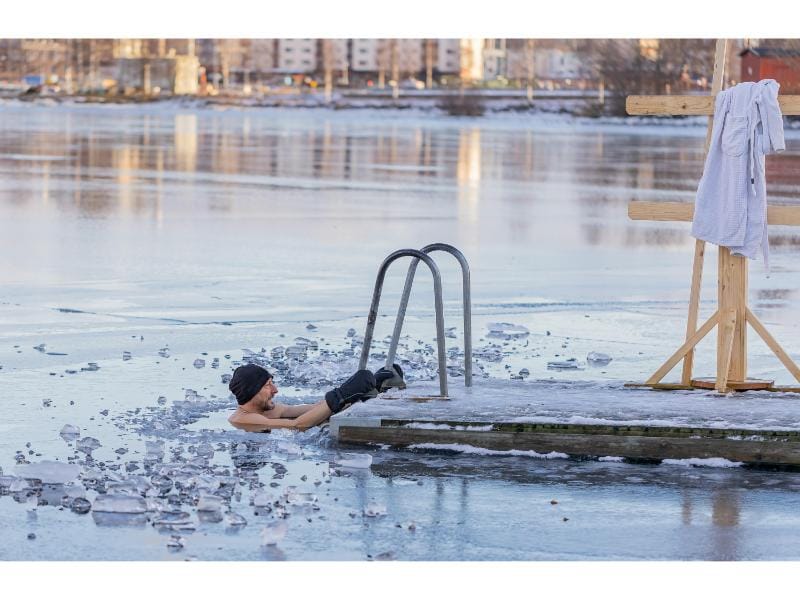
While your mind strengthens with the challenge, your body responds to the cold with impressive physiological optimizations. It doesn’t just survive; it adapts and improves. Exposing yourself to the cold is like sending your body to a high-performance workshop, where key systems are enhanced, from fat burning to reinforcing your natural defenses.
3.1 Activating Your Internal Furnace to Burn Fat
Your body has two main types of fat: white and brown. White fat is for storage, like the kind that accumulates on your belly. Think of brown fat (Brown Adipose Tissue or BAT) as a high-efficiency furnace that, in most adults, lies dormant. The cold is the key that turns on this furnace, forcing it to burn white fat as fuel to generate heat and maintain your core temperature.
Exercising in the cold maximizes this effect. Your body is already working harder to stay warm, and physical activity puts your metabolism into overdrive. The result is a higher caloric burn than you would achieve in a temperature-controlled environment, turning winter into your most powerful ally for fat loss and maintaining a healthy body composition.
3.2 Turning Your Immune System into an Elite Troop
Let’s debunk an old myth: the cold doesn’t cause illness. Viruses and bacteria do. In fact, deliberate cold exposure can do the opposite: strengthen your defenses. A landmark study by Kox et al. (2014) found that participants subjected to cold exposure experienced an increase in the number of leukocytes (white blood cells) and in the activity of “Natural Killer” (NK) cells.
Think of it as a boot camp for your immune system. Controlled exposure to cold simulates a challenge, forcing your defenses to mobilize and become more efficient. This leaves your immune system stronger, faster, and better prepared to identify and neutralize real invaders, reducing the likelihood of you getting sick.
3.3 Improving Performance and Recovery
The physical benefits don’t stop there.
•Cardiovascular Health: In the cold, your heart has to work harder to pump blood and keep the body warm. This extra effort acts as a vigorous cardiovascular workout, strengthening the heart muscle and improving circulation in the long run.
•Muscle Recovery: Elite athletes use ice baths for a strategic reason: the vascular “pumping” mechanism. The cold causes vasoconstriction, contracting the blood vessels and flushing out metabolic waste, like lactic acid, from the muscles. Upon rewarming, vasodilation occurs, flooding the tissues with oxygen- and nutrient-rich blood. This “flushing” process dramatically speeds up recovery and prepares you for the next workout.
Beyond forging a more resilient mind and body, the cold holds a secret particularly relevant to male vitality: its impact on hormonal balance.
4.0 The Hormonal Advantage: The Male Secret of the Cold
For a man, hormonal balance is the foundation of vitality, strength, and overall well-being. Testosterone, in particular, plays a central role in everything. The problem is that winter attacks your hormone levels on two fronts. Fortunately, you can counter-attack with a two-pillar strategy, using winter itself to your advantage.
The first pillar is the direct attack: cold exposure itself. The main mechanism is the stimulation of the pituitary gland to release luteinizing hormone (LH). LH is the chemical signal that travels to the testicles with the order to produce more testosterone. Studies, such as one by Saeidi et al. (2014), observed that immersion in cold water after exercise significantly increased LH levels and, consequently, testosterone in athletes. It’s a way to naturally “turn on” your body’s hormone production system.
The second pillar is the indirect attack: getting outdoors in the cold. The lack of sun exposure during the winter months leads to a natural drop in vitamin D levels. Low levels of vitamin D can indirectly contribute to decreased testosterone. This creates a powerful dual argument for exercising outdoors: you not only get the direct benefits of cold exposure to stimulate testosterone, but you also maximize the little available sunlight to combat the vitamin D deficiency that sabotages your hormonal health.
Now that you understand the “why”—the mental, physical, and hormonal advantage of embracing the cold—it’s time to move on to the “how,” with practical and safe steps to begin your journey.
5.0 Take the First (Icy) Step
Winter doesn’t have to be a season to simply tolerate. Instead, see it as a personal training ground, an opportunity to forge a stronger, more resilient, and focused version of yourself. By challenging comfort, you reconfigure your mind to better handle stress, optimize your body to burn fat and fight disease, and balance your hormones for maximum vitality. The transformation is waiting for you, on the other side of the initial discomfort.
Ready to start? You don’t need to jump into a frozen lake tomorrow. Start with small, smart steps:
•Start Simple: End your hot shower with 30 seconds of cold water. The first five seconds will be an intense dialogue with your creator. The next 25 are pure victory.
•Dress in Layers: To exercise outdoors, use the three-layer system: a synthetic or wool base that wicks away sweat, an insulating layer like a fleece, and a windproof and/or waterproof outer layer.
•Protect Your Extremities: Your body prioritizes warming the core, leaving hands, feet, and head vulnerable. Quality gloves, thick socks, and a hat that covers your ears are non-negotiable.
•Hydrate: The cold air suppresses the sensation of thirst, but you are still losing fluids through breathing and perspiration. Drink water before, during, and after your activity to maintain performance and recovery.
Embrace the challenge. Take the first icy step and discover the power that winter has to offer. As science and experience show us: “Your body, mind, and spirit will thank you for it.”
References:
- PubMed: Vitamin D Supplementation during Winter
- Health.harvard:The wonders of winter workouts
- Aston University: Benefits of Training in Cold Weather
- Sciencedirect: Daylight during winters and symptoms of depression and sleep problems
If this post saved you time, money, or prevented questionable life choices… you can tip below.
This article is for informational purposes only and is not a substitute for professional medical advice, diagnosis, or treatment. Always consult a qualified healthcare provider before making any decisions about your health or starting a new regimen.